

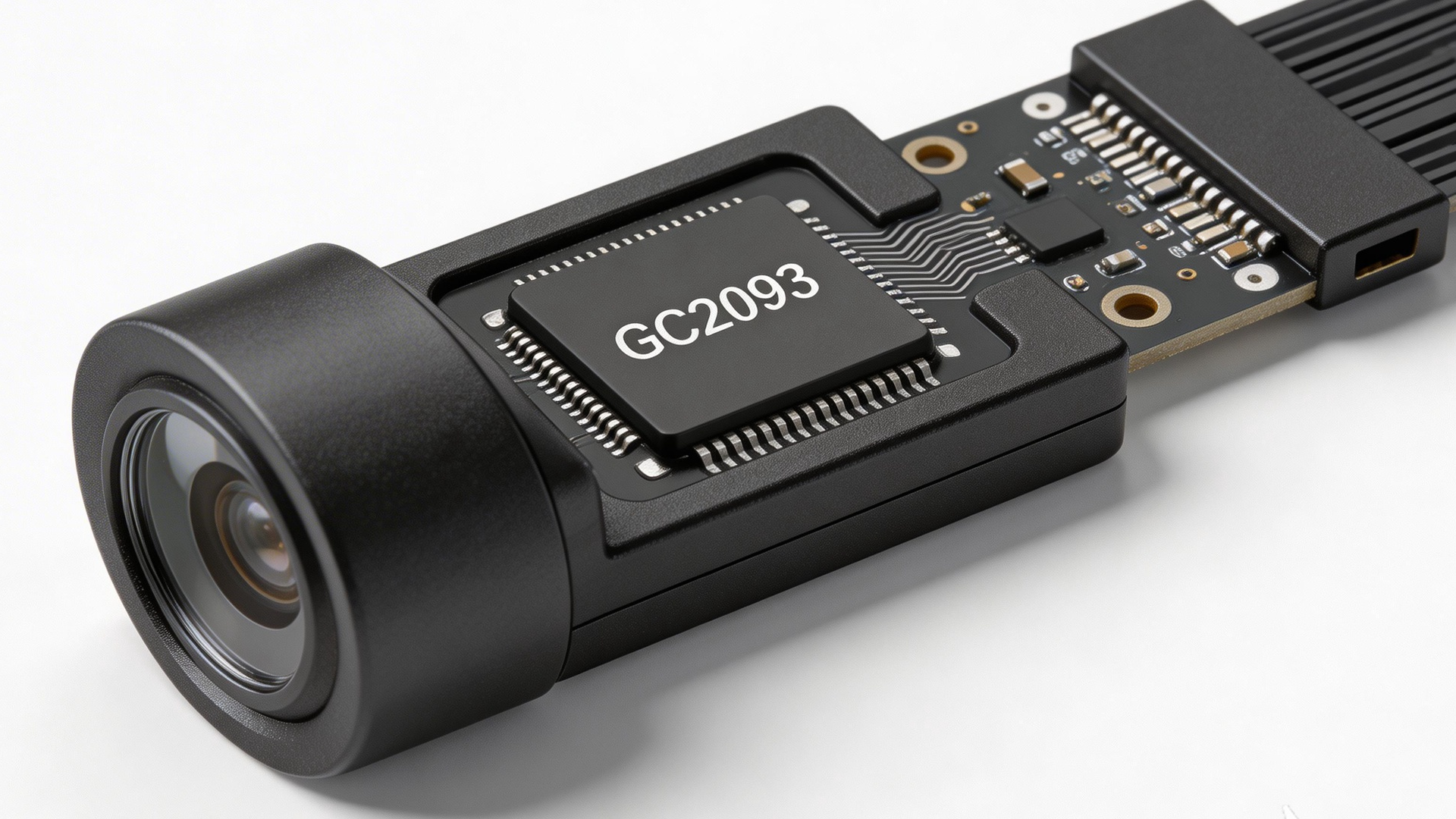
The 60FPS 1080P USB2.0 Camera Module is a compact, high-performance imaging solution built around the GC2093 CMOS sensor. Designed for plug-and-play use via a standard USB2.0 interface,
this module delivers full HD 1920×1080 resolution at 60 frames per second, making it ideal for applications requiring smooth, real-time video capture.
Powered by the GC2093 sensor, known for its excellent low-light performance, high dynamic range, and color accuracy, this camera module is suitable for a wide range of professional and
consumer use cases.
🔍 Description
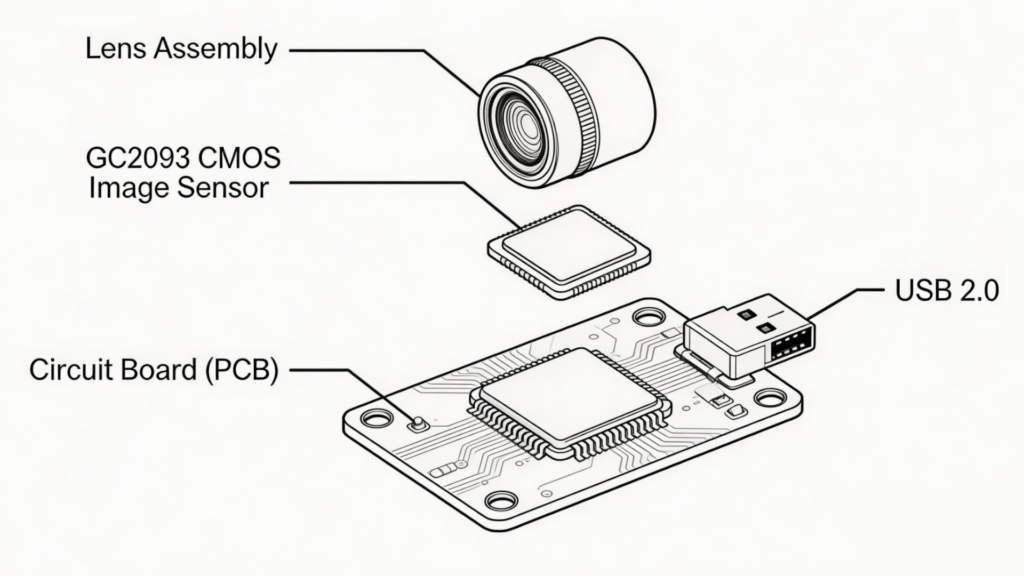
This camera module is based on the advanced GC2093 CMOS image sensor and supports real-time video capture at 1080P (1920×1080) resolution with 60 frames per second, providing excellent image clarity and smooth performance.
It connects via a standard USB2.0 interface, requires no additional power, is plug-and-play, and is widely compatible with Windows, Linux, Mac, and various embedded systems.
📷 Key Features
Sensor: GC2093 (1/2.8-inch CMOS)
Resolution: 1920 × 1080 (1080P Full HD)
Frame Rate: 60 FPS at 1080P
Interface: USB 2.0 (Plug-and-Play)
Lens: Typically supports CS/C-mount (lens not always included)
Video Format: YUV/RAW/MJPEG (varies by firmware)
Low-Light Performance: Excellent (thanks to GC2093’s high sensitivity)
Power Supply: USB Bus Powered (typically 5V)
💡 Application
- Machine Vision and Industrial Inspection: Used for product appearance inspection, barcode recognition, assembly verification, etc.
- Intelligent Monitoring: Suitable for security monitoring, behavioral analysis, facial recognition, and other scenarios
- Consumer Electronics: Such as video conference cameras, live streaming equipment, educational hardware, etc.
- Scientific Research and Medical: Microscope imaging, experimental recording, digital image acquisition
- Drones and Robotics: Visual navigation, obstacle avoidance, environmental perception
🔧 Compatibility and Development Support
Supports standard UVC drivers, ready to use out of the box. Developers can quickly integrate using tools such as DirectShow (Windows), V4L2 (Linux), OpenCV, and it also supports secondary development and algorithm adaptation.
For technical documentation or development support, please contact us.